You check your Trading 212 Portfolio Tracker daily, watching the value bounce up and down. Like Sarah, a UK investor, you feel a jolt of excitement on green days and anxiety on red ones, yet you can't quite tell if your strategy is genuinely succeeding or just riding market waves. This constant focus on the immediate profit/loss figure, while engaging, obscures the bigger picture of your investment health. Without crucial context on risk-adjusted returns, hidden costs, or how you compare to relevant benchmarks, you risk making decisions based on emotion rather than evidence, potentially undermining your long-term financial goals. This article explains how the Trading 212 tracker's design shapes your behaviour, what vital metrics it hides, and how serious investors can gain true control over their portfolio assessment.
What the Trading 212 Portfolio Tracker Is (And Why It's Everywhere)
With over 4.5 million funded accounts and more than £30 billion in client assets as of October 2025, Trading 212 has become a dominant force in the UK retail investment scene. At the heart of its appeal is the Trading 212 Portfolio Tracker — the default dashboard that greets users every time they log in. This real-time display of your portfolio’s current value, profit/loss, and individual holdings isn’t just a convenience; it’s the primary interface through which millions now interact with their investments.
Designed for instant gratification, the Tracker prioritises simplicity and visual appeal. Clean charts show your portfolio’s growth trajectory, while bold, colour-coded profit/loss figures immediately signal whether you’re "up" or "down" for the day. This focus on immediate, digestible information encourages frequent checking — turning the app into a behavioural nudge tool that can promote reactive trading. Features like Pies (automated portfolio allocation and rebalancing) and fractional shares (allowing investment in high-value stocks with minimal capital) further lower the barrier to entry, making investing feel accessible and manageable for beginners. For UK investors, native integration with ISAs adds to its convenience as a one-stop-shop.
But this user-friendly design comes with trade-offs. While the Tracker excels at showing your nominal gains and current holdings, it systematically obscures the deeper, more analytical metrics crucial for evaluating true portfolio health. It doesn’t show how your returns stack up against a relevant benchmark after costs, or whether your gains adequately compensate for the risk you’re taking. For serious investors, understanding these factors — like the impact of compounding costs over time or the principles of efficient portfolio construction — is non-negotiable. Tools like our ROI Calculator or Compound Interest Calculator can help model long-term growth, while concepts explained in our guide on Markowitz Portfolio Optimisation: Plain English highlight the importance of risk-adjusted returns. The Tracker’s omission of these elements isn’t an oversight; it’s a deliberate choice favouring engagement over analytical rigour, leaving sophisticated investors needing more.
Why Your Portfolio Tracker Shapes Your Investment Decisions
Your portfolio tracker isn’t just a dashboard, it’s the lens through which you interpret your investments. For Trading 212’s 4.5 million users, this tool is the daily reality check, the pulse monitor for their financial health. But design dictates behaviour: Real-time profit/loss tickers, vibrant charts, and gamified notifications prioritise instant gratification over strategic insight. This isn’t accidental. When your screen flashes green after a 0.5% intraday bounce, it triggers dopamine, a neurological nudge to check again, and again. Trading 212’s 84% surge in monthly active users during 2025 underscores this engagement-first model. Yet frequent checking is poison for long-term wealth. Decades of academic research on individual investors (notably Barber & Odean's work at UC Berkeley/UC Davis) finds that the most active retail traders consistently underperform buy-and-hold equivalents after costs.
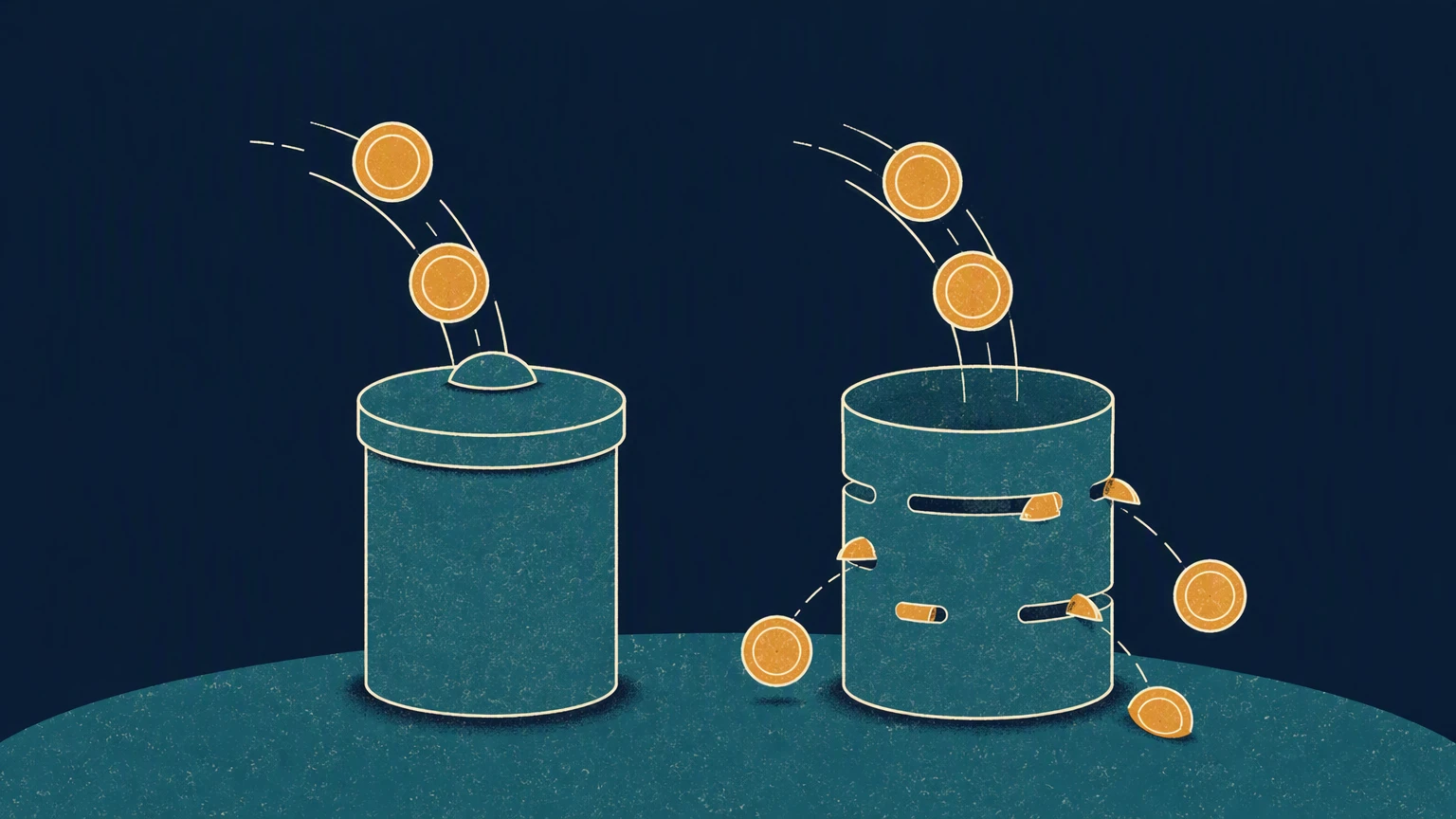
For UK investors, this design fuels unique pitfalls. Imagine fretting over a portfolio dipping a few percent in a day because GBP spiked against the dollar — a currency blip, not a fundamental shift. Without context (like portfolio benchmarking against the FTSE 100 or MSCI World), the tracker amplifies noise as signal. Worse, it obscures cost drags. FX fees on US stocks are folded into the trade price, never displayed as an ongoing line item, so they compound silently in the background. The tracker shows the gross return but hides this erosion.
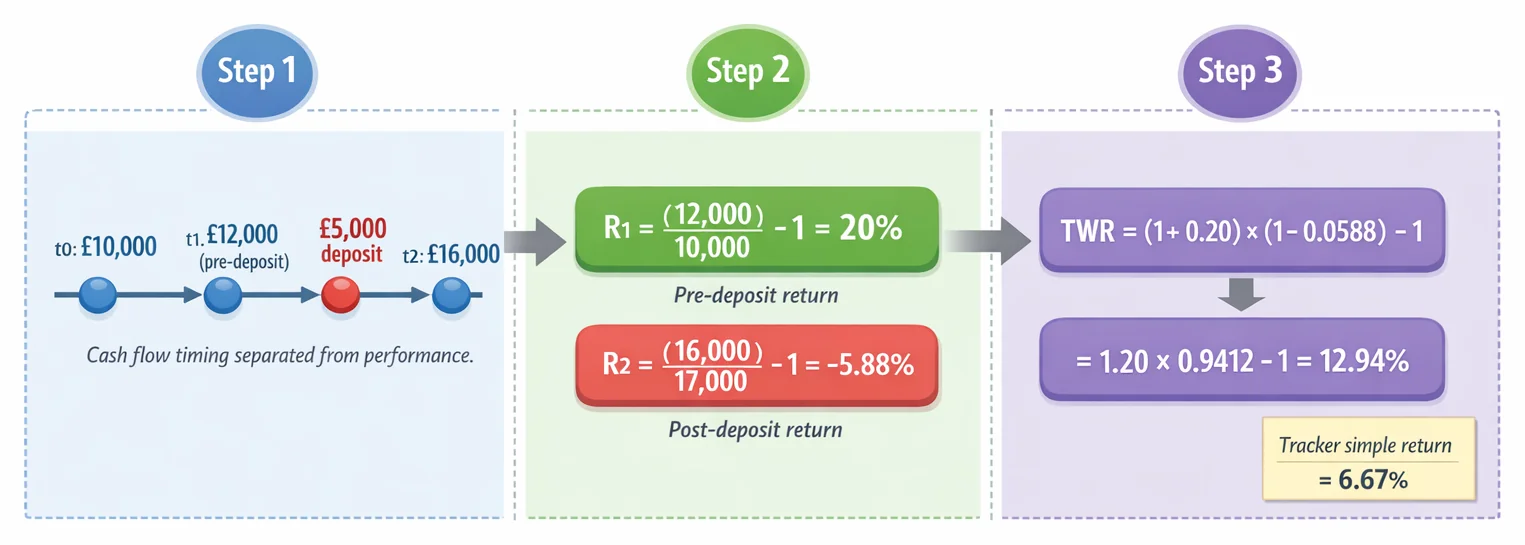
It ignores Money-Weighted Rate of Return (MWRR), a metric adjusting for cash-flow timing. If you deposited £5,000 during a market high, your true performance isn’t the simple "up 10%" the tracker displays. MWRR reveals whether you actually beat the market or just benefited from lucky timing. Without it, you can’t separate skill from circumstance.
This is the core conflict: Trading 212’s tracker optimises for "feel-good" engagement, not the risk-adjusted rigour serious investors need. It celebrates daily P&L fireworks while sidelining strategic drift, like an unbalanced portfolio creeping into meme stocks. For disciplined wealth-building, you need to see:
- How volatility impacts returns (measured by metrics like the Sharpe Ratio)
- Whether you’re beating inflation and your chosen benchmark
- The compounding toll of hidden costs
Tools like our Sharpe Ratio Explained guide or Compound Interest Calculator help fill these gaps. But fundamentally, a tracker should anchor you to strategy, not bait reactions. As UK regulators like the FCA warn: design shapes decisions. When your dashboard highlights noise and buries signal, your portfolio pays the price.
How the Trading 212 Tracker Works: A Step-by-Step Walkthrough
Logging into Trading 212 lands you directly on your portfolio dashboard, where your total portfolio value dominates the screen. This real-time figure, flashing green or red based on market swings, gives an instant emotional pulse check. With client assets surging 140% in 2025, this "at-a-glance" view clearly resonates with casual users. But it’s purely reactive: you see what your portfolio is worth now, not why or how it compares to your strategy.
Click any holding, say, Apple (AAPL), and you’ll see your current profit/loss in pounds and a basic price chart. If you bought shares at £150 and they’re now £180, the tracker shows a tidy £30 per-share gain. Simple? Absolutely. Analytically useful? Less so. It omits annualised returns (e.g., whether that £30 gain took 3 months or 3 years) and cost basis adjustments for corporate actions like stock dividends. This makes true performance analysis impossible, you can’t discern if your "win" actually beats inflation or a savings account.
The built-in charts offer 1-day, 1-month, or 1-year views, perfect for spotting intraday dips or monthly trends. But they lack critical context. Your Tesla position might be up 10% this month, but is that better than the S&P 500’s 5%? Without benchmark comparisons, you’re judging performance in a vacuum. For disciplined investors, this is like driving without a map, you might move, but are you heading toward your goals? Tools like our ROI Calculator help bridge this gap by contextualising returns.
Setting up Pies, Trading 212’s automated investment baskets, is frictionless. Allocate percentages to ETFs or stocks, and the platform handles rebalancing. Yet while Pies show current allocations and individual asset performance, they hide strategic drift. A "Global Tech" pie might drift into healthcare stocks over time without alerting you, muddying your asset allocation. There’s no way to measure the pie’s overall risk-adjusted return, a cornerstone of portfolio health explained in our Markowitz optimisation guide.
Dividends get a dedicated section showing payouts and forecasts, helpful for income seekers. But again, depth is missing. You’ll see you received £50 from Shell this quarter, but not your yield on cost (e.g., the 5% yield when you bought Shell vs. today’s 3%). This obscures whether your income stream is growing or diluting. Compounding effects remain invisible too, our Compound Interest Calculator reveals how even small yield differences create six-figure gaps over decades.
Finally, the tracker silos accounts. Your ISA and Invest holdings appear on separate tabs, forcing manual reconciliation if you want a consolidated view. Despite being a top user request in 2025’s poll, multi-account aggregation remains absent. For investors with complex holdings, this fragmentation hides cross-portfolio risks like overexposure to a single stock.
In essence, Trading 212’s tracker is optimised for engagement: real-time P&L, colourful charts, and one-click actions nudge frequent check-ins and impulsive decisions. But by excluding cost-aware metrics, benchmarks, and unified views, it sidelines the rigour serious investors need, turning portfolio "health checks" into superficial snapshots. For tools that automate this analysis, explore our guide on Sharpe Ratio fundamentals.
What the Tracker Shows (And Why That's the Problem)
Trading 212’s portfolio tracker excels at delivering instant, dopamine-triggering snapshots of your investments. Its most prominent feature, real-time profit and loss (P&L), dominates the dashboard, flashing eye-catching green or red numbers that update with every market tick. You also get simple allocation pie charts showing basic asset splits (e.g., stocks vs. cash), a dividend history log, and built-in fractional share tracking. These features prioritise accessibility, letting you check your portfolio in seconds, a key reason monthly active users surged 92% in 2024, with assets in custody jumping 121%.
But this simplicity is precisely the trap. The tracker’s design isn’t just minimalist; it’s a behavioural nudge engine optimised for engagement, not informed decisions. Consider three critical flaws:
- The P&L Obsession: That bold, real-time gain/loss figure, say, "+£1,500", ignores context. It doesn’t distinguish between realised gains (actual profits) and unrealised paper gains, tempting users to exit positions prematurely during volatility. Worse, it omits risk-adjusted performance. A 10% return might feel triumphant until you discover the FTSE 100 rose 15% in the same period, or that your portfolio swung wildly to get there. Without benchmarking or volatility metrics (like the Sharpe Ratio), you can’t gauge if you’re being compensated for the risk you’re taking.
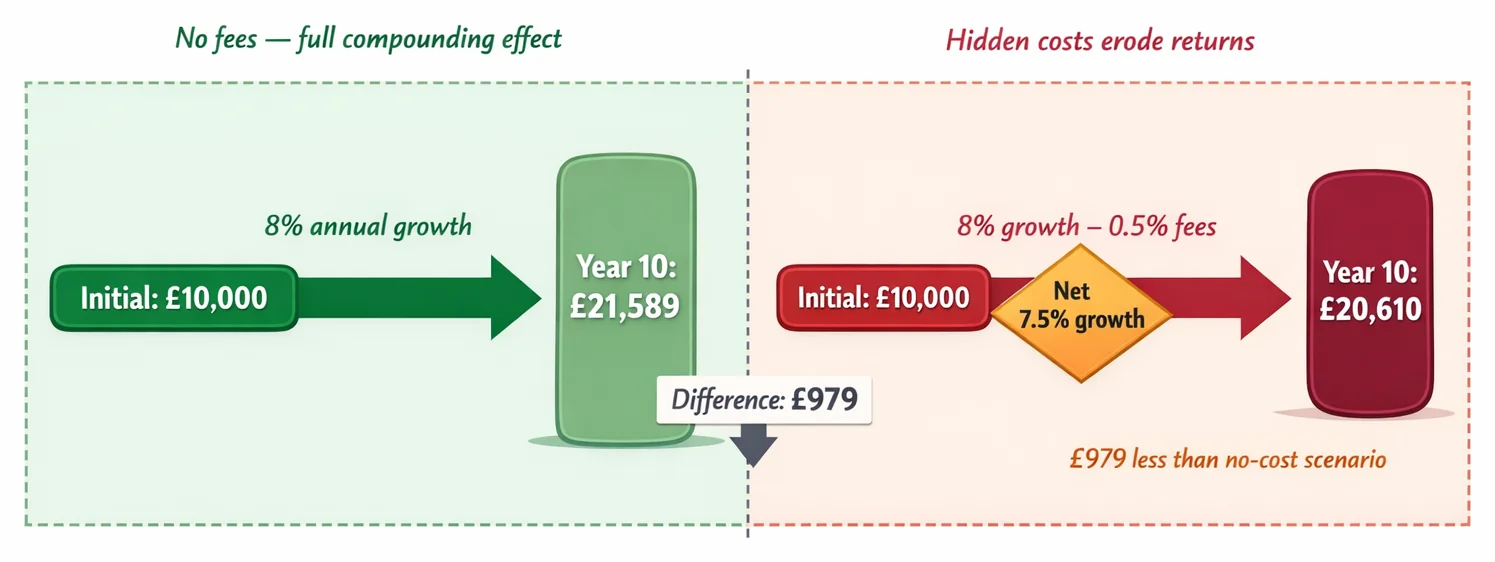
- Hidden Costs & Strategic Blind Spots: The tracker buries fees that erode returns. For example, forex charges on international stocks (e.g., buying US shares as a UK investor) are folded into trade execution prices, never displayed as ongoing costs. Over time, this creates an illusion of outperformance. A 0.5 percentage-point annual fee drag may look trivial on a daily P&L flash, yet over a decade of compounding it carves a meaningful chunk out of terminal wealth (a worked example follows in the next section). Yet Trading 212’s analytics won’t flag this.
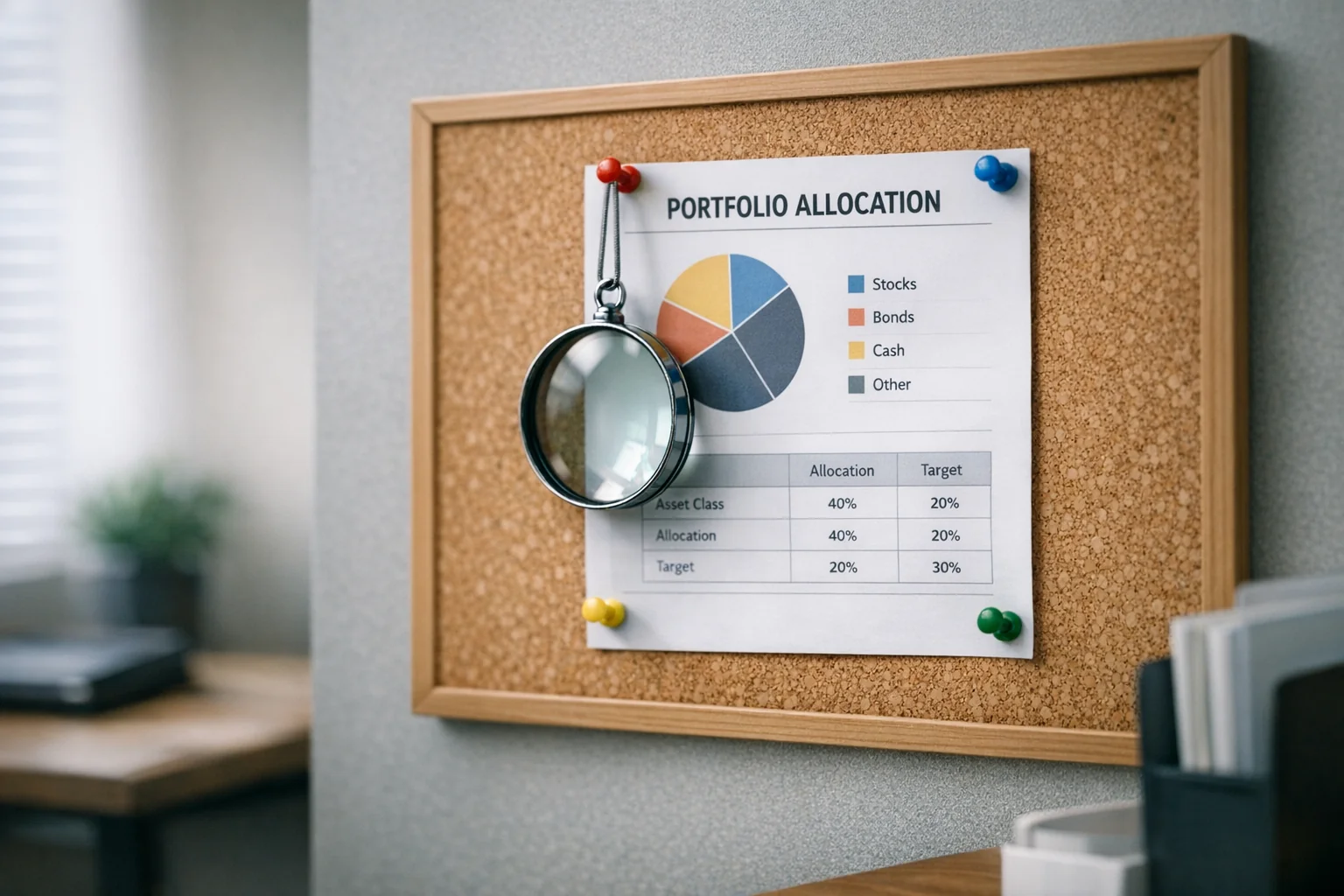
- Oversimplified Allocation Views: The pie charts show broad asset classes but lack sector breakdowns or exposure analysis. You might see "60% stocks," but not whether you’re dangerously overexposed to tech or energy. Similarly, there’s zero performance attribution, no way to see if your gains came from stock picks, market trends, or sheer luck. This obscures "strategy drift," where your portfolio silently veers off-course from long-term goals. For the screening and ranking side of that question, see Best Stockopedia Alternative for UK Investors.
These omissions aren’t accidental; they’re commercial. Trading 212 UK’s revenue soared 72% to £277.6 million in 2025, partly fuelled by features encouraging frequent checking and reactive trading. For serious investors, this is perilous. Without tools to measure true cost drags, benchmark relativity, or risk efficiency, like our ROI Calculator or Sharpe Ratio Guide, you’re flying blind. As modern portfolio theory emphasises, returns alone are meaningless without understanding the journey.
For deeper analysis, explore our suite of Free Tools or learn how compounding subtle costs impacts wealth in our Compound Interest Calculator.
Critical Gaps for Serious Investors: What's Missing in Your Tracker
While Trading 212's portfolio interface excels at delivering real-time P&L and digestible charts for its 4.5 million users, its design intentionally sidelines the analytical rigour serious investors need to evaluate true portfolio health. This simplicity-first approach, reflected in the platform's £123.1 million pre-tax profit surge in 2025, prioritises engagement over empowerment, obscuring critical metrics that determine long-term success. Here’s what’s systematically absent:
1. Risk-Adjusted Performance Context
The tracker shows raw returns but ignores risk-adjusted metrics like the Sharpe ratio, which measures whether your gains compensate for volatility. Without this, a 10% return from high-risk stock picks appears identical to a 10% return from a diversified portfolio, even though the latter achieved it with half the risk. This gap prevents you from answering a fundamental question: "Am I being sufficiently rewarded for the risk I’m taking?" Tools like our Sharpe Ratio Explained guide help bridge this, but integration is essential for real-time decisions. Equally absent is Time-Weighted Return (TWR), the cash-flow-independent metric professionals use to isolate manager skill from investor deposits/withdrawals.
2. Benchmark Relativity Blind Spots
You can’t compare your portfolio against relevant benchmarks like the FTSE All-Share or a custom ETF (e.g., VWRL). This omission has real consequences: You might think your stock picks gained 8% annually over five years, but if a low-cost global ETF returned 10% in the same period, you’re underperforming without knowing it. Without benchmark overlays, assessing strategic drift (e.g., overexposure to fading sectors) becomes guesswork.
3. Hidden Cost Drags
While Trading 212 highlights explicit fees, it ignores spread costs and FX fees, silent killers of returns. For example:
- A 0.15% FX fee on £10,000 of US stock trades costs £15 per transaction.
- If you trade 20 times annually, that’s £300/year. Compounded over 10 years at 7% growth, this snowballs into £4,136 in lost potential gains (calculated via our Compound Interest Calculator). These uncaptured costs inflate your perceived performance, masking erosion of real wealth.
4. Fragmented Account Analysis
Performance data isn’t segmented by account type (ISA vs. Invest). With differing tax treatments, a 7% return in an ISA (tax-free) is materially better than 7% in a taxable Invest account, but the tracker won’t show this. As SIPPs integrate in 2026, this flaw will compound: without side-by-side comparisons, optimising asset location across tax wrappers becomes impossible. Trackers built around the wrappers themselves are compared in Best Portfolio Tracker for ISA and SIPP.
5. Tax-Aware Returns
Capital Gains Tax (CGT) reporting is absent. Pre-tax returns are meaningless when tax efficiency determines net wealth. Imagine two portfolios:
- Portfolio A: 10% return with high turnover, triggering £1,200 in CGT.
- Portfolio B: 9.5% return with minimal turnover, owing £200 in CGT. Portfolio B delivers higher after-tax wealth, but the tracker only shows Portfolio A as "superior." Our ROI Calculator can model tax impacts, but manual adjustments shouldn’t be necessary.
The Bottom Line
These omissions aren’t oversights, they’re byproducts of a model optimised for frequent engagement over strategic discipline. While profitable for Trading 212 (£92.2 million net profit in 2025), it leaves serious investors blind to compounding costs, benchmark underperformance, and tax inefficiencies. Until these gaps close, tools like our Portfolio Calculator and third-party analytics remain essential for anyone prioritising risk-aware, cost-optimised growth.
Common Tracker Mistakes and How to Avoid Them
Trading 212’s frictionless interface encourages habits that actively undermine long-term wealth building. By prioritising instant gratification over analytical depth, investors often fall into these five traps:
Chasing Daily P&L Fluctuations The dashboard’s prominent real-time profit/loss display triggers emotional reactions to market noise. Checking daily swings leads to panic selling or FOMO-driven buying. Fix: Schedule quarterly portfolio reviews only. Use the tracker for monthly check-ins to log dividends or corporate actions — not to monitor paper gains.
Ignoring Hidden Costs FX fees (0.15% on US stocks), spread markups, and compounding dividend taxes silently erode returns. A £10,000 investment growing at 8% annually would reach £21,589 in 10 years. With just 0.5% in annual hidden costs, it grows to £20,610 — a £979 shortfall. Fix: Use a simple spreadsheet to track all deposits, withdrawals, and fees. For dividend tracking (which Trading 212 consolidates poorly), third-party tools are essential.
Skipping Benchmark Comparisons Without context, a "10% annual return" seems impressive — until you learn a global benchmark returned 12% over the same window. Trading 212 shows no relative performance against indices. Fix: Compare your portfolio monthly to a global benchmark like VWRL (FTSE All-World ETF). Use our Portfolio Calculator to model benchmark-aligned growth.
Over-Relying on "Pies" Without Rebalancing While Pies automate allocations, they lack rebalancing alerts. A 60/40 stocks/bonds pie can drift to 70/30 after a bull market, increasing risk. Fix: Set calendar reminders to rebalance quarterly. For advanced control, explore Trading 212’s Equity Trading API to build custom rebalancing scripts. Learn core principles in our guide to Markowitz Portfolio Optimisation.
Mixing ISA and Taxable Account Performance Combining tax-sheltered (ISA) and taxable accounts inflates apparent returns. A 7% ISA gain is yours entirely; in a General Investment Account, capital gains and dividends above the annual allowances are taxed at HMRC's prevailing CGT and dividend rates, materially shrinking your net return. Fix: Track accounts separately. Model post-tax returns using our ROI Calculator.
These design gaps aren’t accidental. Trading 212’s 2024 revenue exceeded £194 million (£161.7M from UK operations), with profits surging to £43.8 million. Their business thrives on frequent trading — making engagement-driven features a core revenue strategy. For true portfolio health, supplement the tracker with disciplined habits and external tools. Measure risk-adjusted returns using metrics like the Sharpe Ratio, and always contextualise performance against the market’s baseline.
Taking Control: Your Action Plan for Smarter Tracking
While Trading 212's portfolio tracker excels at frictionless engagement, letting you trade over 13,000 stocks and ETFs commission-free with fractional shares from £1, its design omits critical analysis. True investing discipline requires moving beyond its real-time P&L flashes. Here’s your actionable five-step plan to fill the gaps:
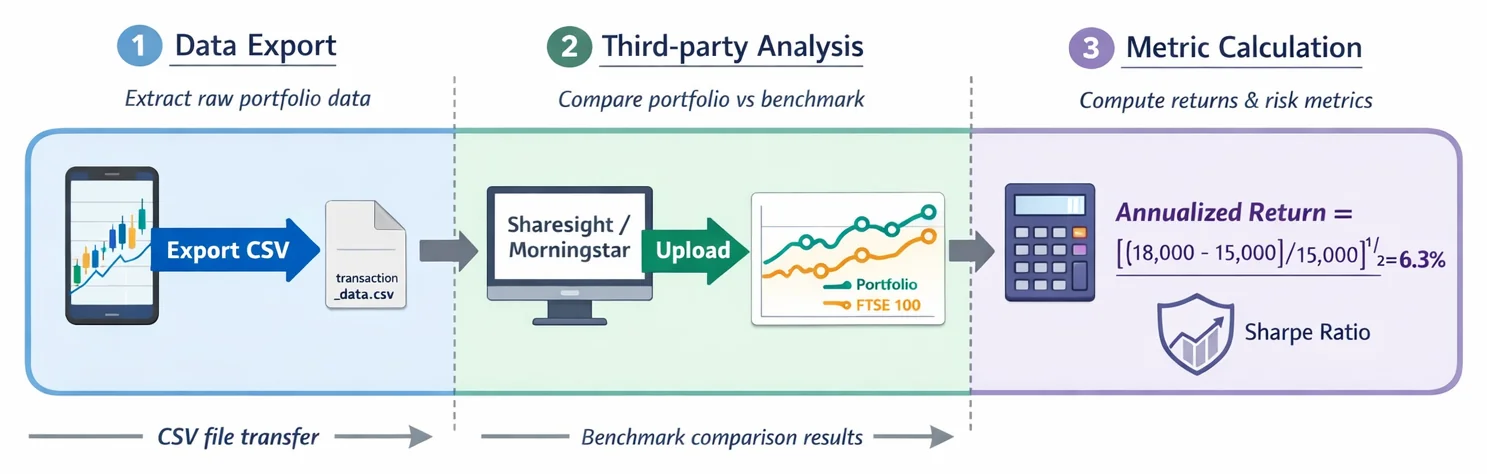
1. Export Your Trade History Monthly
Download your transaction CSV file via Trading 212’s "History" tab. This raw data reveals what the tracker hides: currency conversion fees (critical for multi-currency holdings), spread costs, and dividend tax drags. Manually review deposits, withdrawals, and trade executions. Example: A £10,000 investment with £200 in hidden FX fees needs 2% growth to break even, a detail masked in-app.
2. Benchmark Using Free Third-Party Tools
Upload your CSV to platforms like Morningstar or Sharesight. These tools compare your performance against relevant indices (e.g., FTSE 100 or S&P 500) and adjust for multi-currency effects. If your portfolio gained 8% while the FTSE returned 10%, you’re underperforming, context Trading 212 rarely provides.
3. Calculate Your True Annualised Return
Use this formula quarterly (a simple lump-sum approximation; for staggered deposits, use MWRR via a third-party tool): (Current Portfolio Value ÷ Total Deposits) ^ (1 ÷ Years Held) - 1 Example: Deposited £15,000 over 3 years; current value = £18,000. (18,000 ÷ 15,000) = 1.20. Annualised: 1.20^(1/3) - 1 ≈ 6.3%. Compare this to UK inflation using our Compound Interest Calculator to gauge real growth.
4. Schedule Quarterly "Audit" Reminders
Set calendar alerts to:
- Rebalance Ready-Made Pies (their automated allocations drift with market moves).
- Review fees/performance using your CSV exports.
- Revisit goals with our Portfolio Calculator to check alignment.
5. Demand Better Analytics
Join Trading 212’s user forums to advocate for:
- Risk-adjusted metrics (e.g., Sharpe Ratio).
- Cost-basis tracking per asset (a top 2025 user request).
- Custom benchmarks (vital for strategic asset allocation).
The Winning Combo: Use Trading 212 for execution and convenience, especially its fractional shares and FCA-regulated security (with £85,000 FSCS protection). But pair it with external validation. Tools like our ROI Calculator or Correlation Calculator transform raw data into insight. For advanced investors, ARIA PM handles survivorship adjustment, cost modelling, and regime stress-testing automatically, so you can focus on interpreting results rather than building the simulation.
True wealth isn’t built by watching simplified profit/loss tickers. It’s forged by measuring what matters: costs that erode returns, risk-adjusted performance, and strategic discipline. Master these, and you turn data into durability.
Key Takeaways
- Trading 212's Portfolio Tracker favours simple, engaging displays of nominal profit/loss to encourage frequent app use, deliberately omitting the risk-adjusted metrics and cost analysis essential for serious portfolio evaluation.
- The tracker obscures your portfolio's risk-adjusted performance, failing to show metrics like Sharpe ratio or whether your gains adequately compensate for the volatility you've endured.
- It hides the compounding drag of costs (like FX fees and spread) on long-term returns, preventing a true understanding of your net performance.
- The interface lacks meaningful benchmark comparisons, so you cannot easily see if your portfolio is genuinely outperforming a relevant market index after all costs.
- Its focus on real-time P&L and colourful daily changes actively encourages emotional, reactive trading decisions rather than disciplined, long-term strategy adherence.
| Feature | Trading 212 Shows | Serious Investors Require | Impact of Omission |
|---|---|---|---|
| Performance Focus | Real-time P&L (green/red fluctuations) | Risk-adjusted returns (e.g., Sharpe ratio) | Encourages emotional reactions to volatility |
| Cost Transparency | Zero explicit commissions | Total cost drag (spreads, forex, fund fees) | Masks true profitability erosion |
| Benchmark Context | None | Relative performance vs. index (e.g., S&P 500) | Obscures under/outperformance |
| Asset Allocation | Basic pie chart | Strategic drift alerts vs. target allocation | Allows unchecked risk exposure |
| Holding Depth | Price charts and headlines | Fundamental metrics (P/E, yield, growth) | Limits informed security analysis |
Tool Comparison: Behavioural Nudge vs. Analytical Rigour
| Investor Need | Trading 212 Approach | Enhanced Solution | Recommended Tools |
|---|---|---|---|
| Performance Analysis | Daily P&L dopamine hits | Long-term, risk-adjusted metrics | Portfolio Performance, Sharesight |
| Cost Tracking | Hides spreads/fund fees | Full cost-of-ownership auditing | Sharesight, custom Google Sheets |
| Rebalancing | No drift alerts | Automated allocation checks | Portfolio Performance, Google Sheets |
| Security Research | Minimal fundamentals | Deep equity/fund due diligence | Morningstar, Simply Wall St |
| Macro Context | Isolated position view | Market/economic trend integration | Koyfin |
Sources
- Portfolio Overview, Trading 212's official documentation detailing portfolio tracker features, metrics, and display elements.
- FCA: Investment Platforms Market Study, FCA regulatory analysis of platform functionalities, limitations, and investor protection considerations.
- SEC: Investor Bulletin: Automated Investment Tools, SEC guidance on risks/limitations of automated platforms, including performance tracking gaps.
- Investopedia: Portfolio Management, Core concepts for serious investors, highlighting metrics often missing in basic trackers.
- Morningstar: Portfolio Tools and Reports, Comparison of advanced portfolio analysis features vs. basic trackers.
- FINRA: Tracking Your Investments, Key portfolio monitoring principles and regulatory expectations for investor tools.